Sunday, December 25, 2011

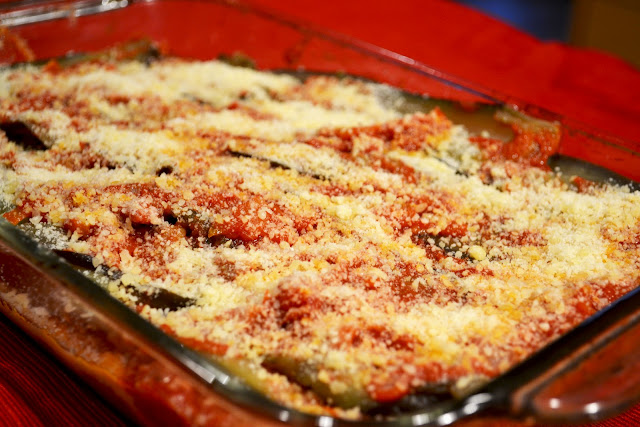
Melanzane alla Parmigiana

Very few areas in Italy, and probably around the world , have such a rich culinary tradition like the Emilia Romagna region. Every city, every little "Borgo" or "Villaggio" is an incredible and exquisite concentration of wonderful people, romantic landscapes and, of course, pure, simple gluttony. I had the privilege of going to college in the city of Bologna, called " La Grassa" (the fat) for obvious reasons. I was lucky that having to study and being under stress for a long period of time, I was able to counteract the countless number of calories I was indulging on a daily basis. From mortadella to piadine, continuing on to tortelloni and ragu' of every kind. From this perspective, the city of Parma is a valid and strong contender for the title of food capital in this splendid region. Some people might ignore the origins of very well known food such as the Parmesan Cheese (the real Parmigiano Reggiano) and the famous Prosciutto di Parma, not to mention the incredible variety of mushrooms and truffles which are abundantly found in the hills adjacent Parma and equally used in different pasta recipes. Thus the name"food valley" where famous chefs such as Mario Batali found inspiration and glory. A recipes that is equally famous, but very often misrepresented around the world in the Melanzane all Parmigiana or Eggplant Parmesan. Very often this recipe is mistaken with the Parmigiana di Melanzane, which is typical of the Campania region and where the eggplants are fried, giving a quite different end result, but never the less equally delicious. The melanzane alla parmigiana is a simple light, tasty vegetarian entree that I believe can be presented in every season and during different occasions.


Ingredients:

1 1/2 lb of eggplants, sliced
1 oz. of butter
2 tablespoons of extra virgin olive oil
half onion diced
1 1/2 oz. of prosciutto crudo
1 1/2 pound of crushed tomatoes
1/2 cup of fresh grated parmesan cheese
salt
pepper

Slice the eggplants by length about 1/4 inch thick. Boil them in hot, salted water for 2 minutes. Then put them on a tray and let them dry in a warm oven. Meanwhile in a large skillet,  heat 2 tablespoons of extra virgin olive oil, onion and the butter. Add the prosciutto cut into little cubes,  and finally after a few minutes of simmering, add the tomatoes, salt and pepper and let it cook for at least 20 minutes.
In a glass baking dish create a layer of eggplants, cover with the tomato sauce and sprinkle abundantly with grated parmesan cheese. Continue to layer until you used all the ingredients. At the top layer, add a little bit of butter and Parmesan cheese to cover the dish. Bake at 450 degrees for 20 minutes and serve in the same baking dish. Pair up with a nice red Cabernet or Pinot Noir.


Sunday, October 16, 2011

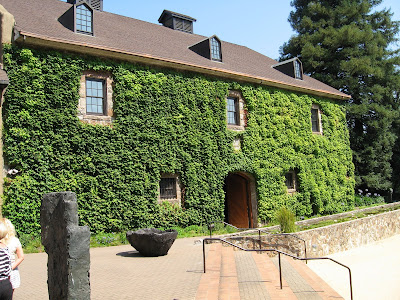
Napa Valley, California

Very few places in the United States, and maybe worldwide, are so rich and charming when it comes to food and wine culture. One of the things that I miss the most since I moved from Italy and relocated to California is sometimes the lack of appreciation, or maybe knowledge, of traditional cuisine and food culture in general. I was somewhat disappointed on how the fast food industry was able to establish itself as the mainstream choice, maybe due to convenience, when it comes to enjoying a meal. On this perspective, Napa Valley represents a gem . This incredible viticulture area dates back to the nineteenth century and it is really remarkable how some of the original wineries still fully operate today with success.It wasn't without struggles throughout this long period of time that Napa Valley came to be what it is today. Prohibition certainly didn't help and a lot of wineries were forced to close during that period. NapaValley can also pride itself on being able to be preserved as an agricultural area, while neighboring counties such as Sonoma and Solana have allowed more extensive commercial building through the last few decades.
The first time I went to Napa Valley, the immediate impression was of disbelief of how such a view looked and felt so familiar, in such a remote place away from home. The hills on both sides of the main road are gently sloping down, reveling an endless patters of vines that continue from hill to hill, making almost impossible to define where a winery property starts, and the next one begins.
I also really enjoy the distinctive scent of grapes that permeates the entire valley, from the small city of Napa at one extremity, to the most upper little charming town of Calistoga where I usually stay, home of a nice looking Geyser, worth a visit.
Right between Napa and Calistoga, there is St. Helena, a very cute and small town with little shops and nice walks. It is also probably the most expensive, if you are looking for a place to stay in the valley.
So, since you most probably come here for food and wine, I 'd like to mention a few places that in my opinion stood out during my three trips.
The winery that more than other got my attention is Hess. Their varietal of wines are very enjoyable, especially the reds , and the locations is absolutely beautiful, right in the middle of Mount Veeder. It takes a good 20 minutes of meandering roads to reach the location, but once you get there , you are in for a treat. The building is a mix of modern and traditional architecture and it blends perfectly with the surroundings. The staff is very friendly and professional. Inside the building there are also three floors dedicated to an extensive art gallery, where the exhibitors change quite frequently, something really remarkable  that I have not found in any other winery I visited. The wine is really good, so good that I decided to subscribe to their wine club and receive their monthly shipment at home. This is probably the best and only way to get their Mount Veeder Block Cuvee, definitively my favorite among reds.


Another winery that I liked for the combination of quality of products and scenery was Sterling. The interesting part is that in order to get to the winery, you can choose to go on a small gondola ride, worth it just for the spectacular view which is only a preview of what it will be revealed once you are up the hill. The tasting area is really cozy, on a small patio, where you have a nice view on the north side of the valley. You can also go on a self directed tour, following the well indicated path to follow and see different steps of the wine production, to end up in a beautiful terrace with a 180 degree view of the South side of the Valley ( this is where you want to take your pictures.)
Their variety of wines is also really good. I highly recommend their Chardonnay and Cabernet.
Next I'd like to mention a couple of restaurants. I'd like to point out the fact that I'm a little bias toward Italian food , which I consider one of the most satisfying and complete cuisines worldwide ( but I'm open for a debate..)  .
I really enjoyed a place called TraVigne ( among vines in Italian) located in St Helena. The food is really good traditional Italian and the ambience is really nice with an inviting outdoor area and a side building or "pizzeria" dedicated just for pizza. I really enjoyed their home made mozzarella and the sage infused pappardelle with rabbit ragu'.
Another place that's worth mentioning is Mustard's Grill. As soon as you enter the restaurant the scent of burning oven will hit you right away. I love that, because it remind me of a lot of Trattorias in Italy. Don't escape a drink at the bar. I love the bartender laugh, loud and thundering ! I enjoyed the grilled hanger steak, It was cooked to perfection.
It is really hard for me to sum up in a few paragraph such an incredible place and mention only couple of wineries and restaurant, because, seriously, it is very hard to go wrong once you're up there !!


Monday, April 25, 2011

Piadina romagnola


The piadina is an Italian flatbread which comes from the Romagna region of Italy. It is sort of like an Italian version of fast food, as they are often sold at kiosks or roadside stands. They somewhat resemble a tortilla or pita bread, and are filled with a variety of delicious ingredients. Traditionally, it would be filled with prosciutto, salame, tomato, squaccherone cheese, the possiblities are endless . The piadina dough is quite easy to make, and then it can be cooked on a griddle or on a stone. Piadine lend themselves well to entertaining, because it fun to spread out a variety of toppings, and let your guests try different combinations. As the host you'll have to keep them coming for a while, but the magnificent aroma that will fill the air, and the happy diners with be worth the while. I suggest you serve them with a nice dry Lambrusco from Emilia Romagna. Just when everyone is just about full, it is time to break out the Nutella for the final dessert piadina.

Ingredients:

4 1/4 cups of flour
2 tsp of salt
1 tsp baking soda
6 tbsp. high quality lard (I make my own, you can substitute olive oil if you want, not the same though)
1 cup warm water

Your favorite cold cuts, soft cheese, or tomato, arugala as accompaniments.

A note about lard. Some people don't like the idea of eating or cooking with lard, but it really is an essential part of the piadina. Since in the United States it isn't so easy to find high quality lard, you are best off making your own ahead of time. Just get about a half pound of bacon, and cook it in a saute pan until it is crisp. Take the bacon grease it has rendered and put it into a small container. Let it cool, refrigerate if you wish. You will have delicious lard.
I use a stand mixer to make the dough, but you can certainly do it by hand. Combine all of the dry ingredients into your mixing bowl. Crumble the lard into chunks, and knead a little bit by hand. Next add the water, and combine the ingredients with a paddle attachment or a dough hook. The dough should be smooth and elastic. At this point you want to put your dough into a bowl, and cover it with a kitchen towel. The dough needs to rest for at least 30 minutes. If you are making it ahead of time, you can refrigerate it for a few days, but be sure to let it come to room temperature before rolling out.
When you are ready to make the piadine, divide the dough into 12 equal pieces. Roll teach piece into a ball. Then with your rolling pin, roll out the dough into a round shape, about 7 inches in diameter.


I usually end up cooking my piadine on a griddle. It is best to let it get nice and hot, at least about 10 minutes over medium high heat. Then cook each piadina for about 45 seconds on each side. If it becomes too crispy, then your heat is too high. It should remain pliable, not hard. Serve immediately, and keep them coming. You may want to have multiple griddles going simultaneously, depending on the number of people you are cooking for.
As soon as the piadina is done, fill it with your favorite accompaniment, like prosciutto and mozzarella, or bresaola, brie, and arrugala. The possibilities are endless. ENJOY!!!!
Enhanced by Zemanta

Tuesday, April 19, 2011

Rocciata umbra


Rocciata is a traditional round pastry dessert typical of the central regions of Umbria and Marche. Its name can vary according to different areas of these culturally rich regions. For example, around the mountain of Foligno is known as ntorta. Its origins, like most of the culinary traditions around this area, find its roots in old times. Some might speculate that the Rocciata, may have been brought by the Longobards' influence from North Europe, thus the strong similarity with Austrian Strudel. Today this dolce is mostly known around the Foligno area. It is usually made around the beginning or during the fall season, when the walnuts, a major ingredient, are harvested.

Ingredients:
3 apples
3 pears
1 banana
5 dried prunes pitted
3/4 cup of walnuts
1/2 cup  of raisins
1/4 cup of pinenuts
2 tsp of cinnamon
3 tb sugar
1 tsp dried anise seeds
1 tb cocoa powder
4 ounces milk chocolate cut in little pieces
1 zested orange peel
1 zested lemon peel
2 sheets of frozen puff pastry thawed at room temperature (you can also make it fresh from scratch)

Prepare all the ingredients in little fine pieces and let them marinate in a large bowl for 45 minutes. Meanwhile take the two puff pastry sheets and roll flat on parchment paper with a little bit of flour to avoid the stickiness. Use one sheet of puff pastry and gently put the filling in the center, paying attention not to put too much. Once the filling is laid, gently wrap the puff pastry around it. With care, shape each section of filled puff pastry into a half circle, and join them at the ends to make a ring shape. Keep the pastry on the parchment paper.  Preheat the oven to 350 degrees and carefully transfer the pastry onto a large baking sheet. Bake for 40 minutes until it turns lightly brown on top.


Enhanced by Zemanta

Thursday, April 7, 2011

Orecchiette con cime di rape


 Orecchiette con cime di rape is the signature dish of the Puglia region of southern Italy. Orecchiette literally translates as "little ears". They look like little bowl shaped discs that are ideal for catching the wonderful sauce they are to be tossed with. Every village in the Puglia region has a special way of making them. We were the lucky recipients of some artisan made orecchiette from Alberobello, Bari. It is worth the effort and expense to seek out the best orecchiette you can find to make this dish, but if neccessary DeCecco makes orecchiette that are readily available at most supermarkets. This classic dish features cime di rape, also known as broccoli rabe in English, or sometimes referred to as turnip greens. I was able to find broccoli rabe at a local grocery store, but you may need to go to a local ethnic produce market. Make sure it is nice and fresh, your dish will be a real treat.
 Ingredients
2 bunches (about 2-3 pounds) broccoli rabe
2 cloves of garlic, minced
2 anchovy fillets, chopped
extra virgin olive oil
salt
grated pecorino cheese
1 pound dried orecchiette pasta

First put a large pot of water to boil, add salt generously. Wash your broccoli rabe, and cut off any hard stems.  Put the broccoli rabe to boil in the salted water for about 10 minutes. When it is tender, remove it from the water with a slotted spoon, drain in a collander and set aside. You will use this same water to cook the pasta, so don't pour it out.

Next add the orecchiette to the same boiling water, and cook according to the package directions. You want the orecchiette cooked, but still al dente. While the pasta is cooking, you will prepare the broccoli rabe condiment for your pasta. In order to get the consistency I like, before heating the broccoli rabe with the other ingredients, I put it in the food processor and pulse it a little bit. You can coursely chop it to your desired consistency prior to using. In a large skillet heat about 1/4 cup extra virgin olive oil. Add the garlic, and stir until brown. Then put the chopped anchovies and break them up with your spoon. Add the broccoli rabe to the skillet and stir well until all the ingredients have combined. You may want to add a little bit of salt, and perhaps a pinch of crushed red pepper flakes.

When the pasta is done, drain it, and add it to the skillet. Toss all the ingredients together over medium heat until they are well blended together. Add more extra virgin olive oil if needed. Serve your orechiette with a sprinkling of grated pecorino cheese on top, and enjoy with a nice red wine. Buon appetito!

Thursday, March 10, 2011

Polipo con patate


I'm still trying to wrap my mind around the different reasons why Greece left such an indelible memory in my mind. Maybe it was the crystal clear blue water, the beauty of which was lost in the darker blues skies. Or maybe it was the majesty and glory of Greek culture and history. I actually had to stare at the Parthenon for a few minutes to realize that it was the real thing towering in front of me, and not some replica building that most of us encountered around the world. Going out for dinner, however I realized that, like in Spain and Italy, it was the food that glorified and celebrated this wonderful country and its people. You just had to have a big smile after such incredible meals in extremely simple, yet charming restaurants. One thing that I particularly remember were the octopi hanging in perfect symmetry on a clothes line, left to dry, or soak up the flavorful air. And then, right after the foil wrapped feta cheese with rosemary, our first appetizer, which in Greece is called "ορεκτικό" pronounced "O-re-kti-KO" , a sumptuous plate of fresh octopus with potatoes and fresh extra virgin oil of olive; yes, Greek, olive oil...!! 
Thank goodness for friendly people and a semi-decent cook book I picked up from the Athens airport. Now I'm able to try to replicate that memory, even if I know that, no matter how hard I'll try, I'll never get close to it. So let's try !


Ingredients
2 lbs octopus (medium size)
1.5 lb potatoes
 1 clove garlic
 1 bunch of parsley
 3/4 cup olive oil
 Crushed red pepper.
 1 carrot
 1 celery stalk
 1 onion
  salt 
 

Defrost the octopus if previously frozen. Peel the garlic and chop finely. Rinse and chop the parsley  In a large sauce pan, stir oil, garlic, parsley and crushed red peppers (I will put ½ teaspoon) and let it simmer. Rinse the octopus and put it in a saucepan with the carrot, celery and onion. Cover them with water and boil for about 40 minutes  (check the with a fork if tender). Let them cool in the cooking water. Drain the octopus and let it dry, then cut into pieces and toss with the flavored oil preheated. Add salt to your taste (do not overdo with the salt because the octopus has already a salty taste.) Rinse the potatoes and boil them whole and then peel. Cut them into pieces and add to the octopus mixture. Serve the octopus warm or cold with the potatoes.I like a chilled white wine, possibly nice dry white wine like a Chardonnay.

Enhanced by Zemanta

Sunday, February 27, 2011

Marinated peppers and leek antipasto


If you are like me, you are always looking for ways to integrate more fresh vegetables into the daily diet. I especially love this appetizer because not only is it light and healthy, but it is also bright and flavorful.  It is best when prepared the day before, so that the flavors really come together. This also makes it great for entertaining, because it just needs to be pulled out of the fridge, add your favorite crostini or crackers to accompany, and you are ready to serve.  To get really great peppers and leeks, go to a local farmer's or ranch market.

For the peppers:
6 bell peppers yellow, red and green
4 tbsp extra virgin olive oil
1 tbsp freshly chopped parsley
1 clove of garlic finely minced
sea salt

For the leek:
3 leeks, trimmed and rinsed
6 tbsp olive oil
1 tbsp lemon juice
2 tbsp balsamic vinegar
1 clove garlic, finely minced
sea salt and pepper

First make the peppers. Get your broiler nice and hot. Put your peppers on a baking sheet, and broil them until they begin to blacken, turning them to broil on all sides. When they are evenly done, put them in a stainless steel bowl and cover it tightly with plastic wrap. Let the peppers cool enough to handle, then peel the skin off, and remove the seeds. Cut the peppers into 1/4 inch wide strips, and arrange colorfully on your serving dish. Drizzle them with a high quality olive oil, and sprinkle with garlic, parsley and sea salt.

Now you are ready to make the leeks.  Once your leeks are trimmed and washed, put them in a pot of generously salted boiling water for about 8-10 minutes. You want them to be tender, but somewhat firm, not falling apart. When they are done, drain them and cut the leeks in half lengthwise so you have 6 nice pieces.
Arrange them next to the peppers on your serving dish. Finally, you are ready to make the vinaigrette for the leeks. Mix together the olive oil, lemon juice, and balsamic vinegar with a little salt and pepper. Once it is well blended, drizzle over the leeks.  Cover your vegetable antipasto and refrigerate until ready to serve. It can be served chilled straight from the fridge, or room temperature. I like to make crostini out of a baguette, or buy them. You can also serve the antipasto with bread or crackers.
Enjoy your beautiful, tasty. healthful appetizer.

Tuesday, February 22, 2011

Costata di Vitello

Veal has been an important ingredient in Italian and French cuisine since ancient times. The veal is often in the form of cutlets, such as the Italian cotoletta or scaloppine or the famous Austrian dish Wiener Schnitzel. Veal is often very tender and easy to cook, but at times can be a little chewy, especially when it curls and releases water during cooking. One of my favorite veal recipes is the "Spezzatino di Vitello" . You have to love your pressure cooker with this and other particular recipes, because it literally takes half the time to tenderize and cook the meat, whether it is veal or beef. The crock pot is also very convenient, especially if there's not a "stay at home chef". One of my favorite aspects of American cuisine is definitively the barbecue and grilling culture. I'm very lucky to live in California, where the weather allows me to be in my backyard basically 10 months a year. For my personal experience, I also think that meat quality is a little better than what I had in Italy growing up, although I'm sure that a nice "Fiorentina" almost has no rival worldwide...This recipe is very simple, because after I have grilled the veal chops, all I have to do is add the mushroom sauce on top, with the potatoes on the side, and pair them with a nice wine.


Ingredients for 2

Two veal chops, 3/4 of a pound each, cut with 1 inch thickness
Mushroom mix ( porcini, shitake, porabella)
2 potatoes
1/4 cup oil of extra virgin olive oil
1 garlic clove
1 cup of dry red wine

Fire up the grill and cook the two chops to your liking, I like mine medium rare , about 7 minutes each side. keep in mind that they will cook a little more once you put them in the pan to saute with your mushroom sauce. In a pan, let the garlic get golden brown in the oil and then toss the mushroom mix. Let me mushrooms become soft and brown and then pour in the red wine, lowering your fire a little bit. You are trying to create a nice sauce, not too thick, not too liquid, so the wine has to mix with the mushrooms sauce and reduce. Meanwhile, don't forget  to keep an eye on your meat ! As a contorno ( side dish) precook the potatoes in boiled water, peel them thoroughly, cut them in small medallion and brown them on separate pan with olive oil, until both sides of the little medallion get that crispy golden color, make sure you salt them on both sides.


Once your chops are grilled , you can put them in the pan where the mushroom sauce is. Try to cover the meat with the mushrooms and the sauce, but don't keep the chops in the pan for more than one minute. Serve on a nice plate, laying the mushroom sauce on top of the chops , with your golden potatoes on the side. Serve with a nice Cabernet.


Tuesday, January 18, 2011

Lasagna Bolognese


Lasagne comes in so many variations, one could spend hours reading all of the different recipes. For me, this one is the classic. My inspiration is the way it is served in Bologna, Italy, with a savory ragu meat sauce and bechamel sauce. Any lasagne which features ricotta/spinach/or cottage cheese is most likely an American adaptation. This one is simple yet time consuming to make. In my opinion, it is worth every bit of the effort. So give yourself some time, pour yourself a glass of wine, and enjoy the lasagne making experience. Your diners will thank you, and the leftovers will be fabulous.

Ingredients:
1 recipe ragu meat sauce (recipe to follow)
2 cups bechamel sauce (recipe to follow)
2 9oz. boxes of Barilla no boil lasagne (one might be enough depending on the size of your casserole dish, but better safe than sorry.
12-16 ounces shredded cheese (I recommend fontina)
1/4 cup grated parmesan cheese

First you need to make the ragu. Here is the recipe:
4 tbsp extra virgin olive oil
1 onion finely chopped
1 carrot diced
1 celery stick chopped
1 clove garlic minced
4 strips bacon
1 1/2 pound ground beef (or mixture with ground veal or pork)
2/3 cup red wine
1/2 cup milk
grated nutmeg
14 oz. can crushed tomatoes in puree
2 tbsp sugar
1 tsp fresh oregano, less if dried
salt to taste
1 lb pasta of choice, tagliatelle or spaghetti
grated parmesan cheese to taste
If you have a chopper, for me this is the easiest way to get started. In your chopper, put the carrot, celery, onion, garlic, and bacon. Cut the ingredients into uniform size pieces before putting in chopper. Then pulse the chopper until everything is pretty finely chopped. Heat the olive oil in a large saucepan, and when it is really hot, and the vegetable mixture. Saute over medium high heat until everything becomes nice and golden. Next add the ground meat, and stir occasionally until the meat is nicely browned.
Add the red wine to the meat mixture. Bring to a boil, and stir regularly until most of the wine has been absorbed by the meat mixture. Add salt to taste. Now add the milk, and a little bit of nutmeg. Continue cooking until most of the milk been absorbed. Next add the chopped tomatoes, sugar and oregano. Stir all the ingredients together, then reduce the heat and let simmer for 1-2 hours if you can. The sauce should take on a brick red color. Sauce should be quite thick, but if is too thick, you can add a little bit of canned tomato sauce (puree) until you get your desired consistency. If the sauce will be used for lasagne, you need it to be thicker. Your sauce is ready!

Next you need to make the bechamel (besciamella sauce):

For the besciamella (bechamel) sauce (makes 2 cups)
1/2 stick (4 tbsp butter)
1/2 cup flour
2 cups milk
1/4 tsp salt
dash of ground nutmeg

Melt the butter in a small heavy bottom sauce pan. Add the flour, and stir with a wooden spoon for about 3 minutes over medium heat. In another small sauce pan, heat the milk until almost boiling. Gradually add the milk to the butter/flour mixture, stirring constantly. A wire whisk is helpful to avoid lumps. Once all of the milk has been added, bring to a gentle boil, and cook for 5-10 minutes, stirring almost constantly. Sauce should be somewhat thick. Season with salt pepper and nutmeg, stir well, then remove from heat.

Once the ragu and bechamel sauce are made you  can assemble your lasagne. First get our your baking dish. I prefer to make a smaller dish with more layers, say 8 x 10 inches. You can use a 9 X 13 baking dish and have fewer layers, or you can make a bigger recipe of sauce or bechamel. It will be delicious in any case. Grease your baking dish generously with butter. Then starting with meat sauce spread a layer at the bottom of the dish. Then place a layer of lasagne noodles on top of that, followed by a layer of bechamel. Top that with a nice sprinkling of the shredded fontina cheese. Continue the layering process, meat sauce, lasagne, bechamel cheese, until you run out of the ingredients, or your dish is full. End with a layer of bechamel, and give that a nice sprinkling of parmesan cheese on top. Your lasagne is now ready to go in the oven.

Preheat your oven to 375 degrees, and let the lasagne bake for about 40-45 minutes. Let it stand about 5 minutes before serving. You are now ready to enjoy, perhaps with a nice green salad and a glass of red wine to accompany. Buon Appetito!
Enhanced by Zemanta

Saturday, January 8, 2011

Bollito Misto


It's cold, it's winter time and I cannot think of a better food image than a nice bowl of warm, tasty, comforting chicken soup. My doctor told me that it really can help to get over a very nasty cold...As in many other aspects of cooking, I know there are two ways of doing this: The quick and easy Progresso or Campbell's way, or the long, tedious but definitively more rewarding way of homemade chicken soup with boiled meats and vegetables. Keep in mind that my Bollito Misto described here a very simplified version of a much more meaningful and complete experience. I had Bollito Misto in the past where lots of different parts, from tongue to head were used. The tricky part of this enhanced version is that each type of meat releases its own juice and therefore gives a different flavor to the broth. Traditionally they would be cooked separately with different cooking times. Moreover, each of these nicely cooked pieces of meat should be paired up to a nice homemade salsa to be enjoyed as a second course. The most famous of the sauces is the "salsa verde" made with parsley, garlic, anchovies and other ingredients. Recipes for this type of salsa are readily available. As I mentioned before, I will keep this recipe simple and practical, but feel free to elaborate with different degrees of difficulty as you please:


Ingredients

1 onion
1 celery stalk
1 beefsteak tomato
3 medium pieces of beef, 4 ounces each
1 whole hen cut into pieces or alternatively use chicken
1 chicken bouillon cube


Start by laying all vegetables and meats at the bottom of the pot. Continue by filling the pot with water, do not fill to the top, just 1 inch more than its half. Cover the large pot with a lid, but letting a little gap on the side to let the steam out. Let the soup simmer at low/medium heat for about 2 hours or until the meat is tender to the touch and the vegetables begin to break down in the broth. At this point , I like to transfer my broth to a smaller pot. I will use the broth to cook with small meat tortellini, or ravioloni or filled pasta of choice. (I love fagottini with prosciutto and parmesan cheese filling). When your soup with pasta is ready , you can serve it as a "primo" ( first course), while the boiled meat, with some veggies and sauces to garnish can be served as a "secondo" or second course.


Enhanced by Zemanta

Sunday, January 2, 2011

Enchiladas Suizas


Enchiladas suizas have been a part of Mexico's food tradition for a very long time. They are thought to date back to the area which is now Mexico City even before the days of Spaniard Hernan Cortez. The word suiza is Spanish for "Swiss", which refers to the the Swiss immigrants in Mexico who had established dairies and cheese production in the country. Thanks to them, these enchiladas are often topped with a sour cream like sauce, or as I prefer, a generous crumbling of queso fresco or cotija cheese. Enchiladas have three basic components, tortilla, some type of filling, and a spicy sauce. The word "Enchilar" in Spanish means to make spicy. In the case of enchiladas suizas the tortilla should be corn, the filling is chicken, and the sauce is a spicy green tomatillo sauce. The result: delicioso! As are many of my favorites, this is a great make ahead meal, and can be made in large quantities to feed a crowd. When you buy the tomatillos, a strongly advise you to go to an ethnic market or ranch market, you will get fresher tomatillos, and spend half the money. Your mainstream supermarket will consider this a specialty ingredient, charge you twice the price,and the product doesn't move, so you will lose freshness. Venture out! So roll up your sleeves and get started, your enchiladas are going to be tasty.

Ingredients:
for the tomatillo sauce:
1 1/2-2 pounds green tomatillos, husked and rinsed
3-4 fresh serrano chiles
2 tbsp olive oil
1 medium white onion chopped
2 cloves of garlic peeled and chopped
1 14 oz. can of chicken broth
1/4 cup chopped fresh cilantro
salt to taste

Ingredients for the enchiladas:
about 15 corn tortillas, maybe more depending on how big of a batch you want to make
about 3/4 - 1 pound shredded cooked chicken (I go to Costco and buy a rotisserie chicken, and use all the meat from that. Easy, flavorful,and moist.
12 oz. queso fresco or cotija Mexican cheese. Use more or less, depending on your desired taste.

First, prepare the tomatillo sauce. You need to boil the tomatillos and chile. Fill a large pot with salted water and bring to a boil. When the water is boiling hard, put the tomatillos and the serrano chiles which you have stemmed, and removed seeds. Boil them for about 5 minutes, then drain and cool.

Next, heat the olive oil in a large skillet. Add the onion and garlic and saute until the onion becomes nicely golden. Then, put your onion and garlic into your food processor with the tomatillo and chile mixture and blend the mixture until it is a somewhat chunky puree. It should be smooth enough to hold together, but not overly processed.

To finish the sauce, heat another tablespoon of olive oil in the same skillet you used to cook the onion and garlic. When it is hot, add the tomatillo/onion puree and stir it constantly for about 5 minutes over medium heat. The sauce should thicken and darken somewhat in color. Now add about a cup of the chicken broth to the sauce, stir well, and let simmer for about 10 minutes. Stir the sauce ofter. If it seems too watery, continue to simmer until desired consistency is reached. If it is too thick, add additional broth. At the end, stir in the chopped cilantro and salt to taste. You will not need to put much salt,as the sauce is really flavorful, and the broth will have salt already. Your sauce can be made a day in advance if you need.

You are now ready to assemble the enchiladas. I usually use a 9 x 13 inch glass baking dish. Use whatever oven proof baking dish you desire. Right before making the enchiladas you need to steam the tortillas, I do them 4 or 5 at a time in the microwave.Just put them in a plastic produce bag with an air hole to vent, and microwave them for 30-45 seconds.
To get the chicken ready, I put the shredded chicken in a mixing bowl, and a add about a cup of the sauce mixture and stir to combine. You want the chicken to be nice and moist with sauce, but not soggy. You also need to save yourself enough sauce to top the enchiladas at the end.
Roll a portion of the chicken filling into your tortillas, and lay them in the baking dish side by side. When done, blanket the tortillas with a nice coat of remaining tomatillo sauce. Generously crumble the queso fresco or cotija cheese over the top. Bake in a 425 degree oven for about 40 minutes. At the very end, turn on the broiler, and let the cheese on top get that golden brown color. Be careful not to burn. Your enchiladas are now ready to serve. They can be served alone, or with some rice, beans, or salad as a side. Serve with a nice cold Mexican beer like Bohemia or Negra Modelo. Buen Provecho!
Enhanced by Zemanta

Wednesday, December 22, 2010

Pasta al Forno


Pasta al forno is the ultimate in rustic comfort food. "Forno" means oven in Italian, so as the name would imply, this is a baked pasta dish. Lasagne is the more common baked pasta, put this variation is absolutely worth making, a definite crowd pleaser. Because it can be made ahead of time, this is the perfect thing to serve when company is coming. If there are any leftovers, they are even better the next day. You need to first make the ragu (meat sauce), then prepare the besciamella and cook the pasta. Then you will be ready to assemble this delight.

Ingredients:

one batch of classic ragu bolognese (see recipe below)
one batch of basic bechamel (besciamella) sauce (see recipe below)
1 pound of dry rigatoni pasta (I prefer Barilla)
ground nutmeg
butter
abundant grated parmiggiano reggiano cheese


First prepare the ragu:

Ingredients:
4 tbsp extra virgin olive oil
1 onion finely chopped
1 carrot diced
1 celery stick chopped
1 clove garlic minced
4 strips bacon
1 1/2 pound ground beef (or mixture with ground veal or pork)
2/3 cup red wine
1/2 cup milk
grated nutmeg
14 oz. can crushed tomatoes in puree
2 tbsp sugar
1 tsp fresh oregano, less if dried
salt to taste

If you have a chopper, for me this is the easiest way to get started. In your chopper, put the carrot, celery, onion, garlic, and bacon. Cut the ingredients into uniform size pieces before putting in chopper. Then pulse the chopper until everything is pretty finely chopped. Heat the olive oil in a large saucepan, and when it is really hot, and the vegetable mixture. Saute over medium high heat until everything becomes nice and golden. Next add the ground meat, and stir occasionally until the meat is nicely browned. Add the red wine to the meat mixture. Bring to a boil, and stir regularly until most of the wine has been absorbed by the meat mixture. Add salt to taste. Now add the milk, and a little bit of nutmeg. Continue cooking until most of the milk been absorbed. Next add the chopped tomatoes, sugar and oregano. Stir all the ingredients together, then reduce the heat and let simmer for 1-2 hours if you can. The sauce should take on a brick red color. Sauce should be quite thick, but if is too thick, you can add a little bit of canned tomato sauce (puree) until you get your desired consistency. If the sauce will be used for lasagne, you need it to be thicker. Your sauce is ready!

Next bring a large pot of salted water boil, and cook the rigatoni until it is still quite firm, quite al dente. Be sure not to overcook the pasta, as it will continue to cook in the oven as it is baked with the ragu. Drain the pasta and set aside until your besciamella is ready, and you are going to assemble the dish.

For the besciamella (bechamel) sauce (makes 2 cups)
1/2 stick (4 tbsp butter)
1/2 cup flour
2 cups milk
1/4 tsp salt
dash of ground nutmeg

Melt the butter in a small heavy bottom sauce pan. Add the flour, and stir with a wooden spoon for about 3 minutes over medium heat. In another small sauce pan, heat the milk until almost boiling. Gradually add the milk to the butter/flour mixture, stirring constantly. A wire whisk is helpful to avoid lumps. Once all of the milk has been added, bring to a gentle boil, and cook for 5-10 minutes, stirring almost constantly. Sauce should be somewhat thick. Season with salt pepper and nutmeg, stir well, then remove from heat.

Once the ragu is made, pasta drained al dente, and bescimella made, you can then assemble your pasta al forno.

I usually use a 9 by 13 inch baking dish for this pasta, but you can use whatever oven safe dish you prefer. First put about a 1/3 cup of besciamella sauce on the bottom of your baking dish. Then in a separate mixing bowl, toss the pasta with the ragu sauce and about a cup of besciamella. Combine well. Then put half of the pasta with sauce in the baking dish. Layer another 1/3 cup of besciamella on top of the pasta. Finish with the remaining pasta and layer the remaining besciamella. Sprinlke generously with grated parmigiano reggiano. Bake in a 400 degree oven for about 40 minutes. Then the last 5 minutes, turn the oven to broil to achieve a nice brown crust on top. Watch carefully as it can burn easily. Let the pasta cool 5-10 minutes before serving. I am sure you will enjoy. Buon Appetito!

Saturday, December 18, 2010

Pollo ai peperoni


There's nothing better and more comforting after a hard and long day at work than to come back home to a nice meal. I really enjoy when you're about to enter the door and you can smell the aroma of whatever today's "chef" is surprising, leaving you pleasantly guessing. One of my favorite is the smell of a bakery, when they make bread or any pastry. It's very comforting and somewhat reassuring. One of my favorite meals that fits into this category is chicken with bell peppers. I like to simmer the chicken very slowly, first in oil and then add some white wine, just for the multiple-layered experience to have every room filled with different aromas. The outcome, of course is outstanding

Ingredients:

6 to 8 chicken drumsticks
3 bell peppers, possibly different colors
1 onion
Extra virgin olive oil
1 garlic clove
1 can of crushed tomatoes  ( 4 fresh tomatoes if you prefer)
half a cup of white wine

Using a large round pot, let the oil get warm before tossing the garlic carefully minced. Once the garlic gets a golden color, peel and slice the onion, toss it in the pot, and let it simmer for about five minutes at medium heat, without making it too brownish. Meanwhile cut the bell peppers, getting rid of all the small seeds, into half an inch large strips. Next, gently lay the chicken drumsticks and let them cook in the oil, making sure they get that crispy brown color given by the oil. Make sure you turn the drumsticks around every now and then to guarantee that color uniformly. Once the chicken looks nicely cooked pour the white wine on top and let it reduce for about three minutes. Now it's time to toss the peppers in the pot, mixing them with the chicken , making sure that the heat is not too high. Cover with a lid letting a little gap for the steam to get out for about eight minutes, stirring every now and then the peppers with the chicken. Finally, pour the tomato sauce on top and mix all the content of the pot with it. I like to leave the  lid on, because the steam falling back into the pot guarantees some moisture while cooking. Now you can put the heat a little higher, but make sure that you check that the sauce doesn't dry out too soon, adding a little bit of water now and then. The chicken will be ready when the sauce is a brick red color, and small tender pieces of the chicken begin to separate from the drumstick bones. Pair up with a nice Cabernet and Focaccia bread.

Sunday, November 7, 2010

Gnocchi con funghi e salsiccia


Gnocchi ( the "ch" in italian has the same sound as a K) were traditionally introduced in Europe when potatoes arrived from the Americas. The Romans specifically introduced them into the Italian region, importing them from various areas of their vast empire. Since gnocchi, literally means dumplings, it might have an even older origin than pasta itself. When I think about gnocchi in any shape or form, I just have the image of my mother with her apron full of flour and her 'mattarello" ( rolling pin). It was a tedious and hard process, but the result was always rewarding and tasty. While we may have the desire to make gnocchi from scratch, and it is the preferred method, this recipe calls for the dried, vacuum sealed variety.  Because most weeknights, that can make this delicious dish accessible. We will post a gnocchi from scratch recipe in the near future. Gnocchi can be made with the most varied ingredients, such as squash, bread, and semolina flour; and they can be flavored mixing the dough with spinach, saffron, and even truffles. They are boiled in water or broth and like pasta they can be dressed  with many sauces such as pesto, tomato, butter and cheese. One of may favorite type of cuisine is the 'rustic' cooking, homemade, old grandma, traditional cooking. Something that has been sent down from generation to generation and that you know it has to be made from fresh simple ingredients. 
Gnocchi with funghi e salsiccia definitively give me that feeling, home, hearty rustic, tasty style of food.


Ingredients:
2 lb. gnocchi (I like Trader Joe's dried, vacuum sealed)
1 1/2 pounds sliced fresh mushrooms (I like to use crimini)
1/2 lb. sweet Italian sausage
1 leek
1/2 carrot
1 celery stalk
1/4 cup marsala wine
1 sprig of fresh rosemary
5 tablespoons unsalted butter
salt and pepper to taste


Combine the carrot, celery and leak in a chopper or food processor until finely chopped. Then saute them in a hot skillet with 3 tablespoons of the butter. Once they begin to soften, add all of the mushrooms. Stir all together over high heat. Cook for about 5 minutes, then add the marsala wine. Again, stir occasionally, until the mushroom mixture begins to caramelize, and the most of the wine has been reduced. Season with salt and pepper. Lower the flame to a simmer, and cover for about 15-20 more minutes. If the mixture becomes to appear too dry, you can add some more wine, or more butter. 


Heat another smaller skillet and add the remaining 2 tablespoons of butter. Next, get the sausage and remove it from the outer casing, crumbling it into small pieces into the hot skillet. At this time add your sprig of fresh rosemary, coarsely chopped.  Once the sausage is cooked, add it to the mushroom mixture. Stir all of the ingredients together, and remove from heat. 


While the sausage and vegetable mixture are cooking, bring a large pot of salted water to a hard boil. When water is ready, drop in the gnocchi and cook to package directions, being very mindful not to overcook. They only take a few minutes. When gnocchi are done, drain them, then toss them with the mushroom sausage mixture over high heat, until everything is uniformly combined, and nice and hot to be served. The gnocchi should be stirred very gently, as they are delicate. If you like, serve in your desired serving dish with a sprinkling of grated parmesan cheese on top. This is a hearty, delicious, rustic meal. ENJOY!
Enhanced by Zemanta

Friday, October 29, 2010

Stuffed Vegetables


Whenever I am getting ready to prepare a meat dish, such as a roast of some kind, I am always left puzzling about what kind of side dish to prepare with it. Vegetables are colorful, and full of vitamins, but I am always looking for new ways to keep them tasting fresh and interesting. These stuffed vegetables (usually peppers, onions,and tomatoes) are easy to make ahead of time, and they reheat really well. They are hearty, and simply delicious. Even picky eaters who aren't crazy about the vegetables by themselves will be won over by the wonderful parmigiano reggiano cheese and the bread crumbs. They make great leftovers the next day.

ingredients:
2 red onions, peeled and halved lengthwise
2 red or yellow bell peppers, halved with the seeds removed
2 large tomatoes, halved crosswise, seeds and juice set aside
1 cup of bread crumbs
1/2 cup grated parmigiano reggiano cheese
1/2 cup finely chopped parsley
1/2 cup olive oil
salt and pepper to taste

Heat the oven to 450 degrees. Next, bring a large pot of water to a boil. Once the water is boiling hard, put the onions in for about 2-4 minutes until they are somewhat soft. Remove the onions, and once cool take out the inside layers and set them aside, leaving you with an outer shell of onion about 2-3 layers thick.

In a food processor put the inside from the onions, the seeds and juice from the tomatoes, and the parmesan cheese, bread crumbs, parsley, and olive oil. Add salt and pepper to taste. Pulse the food processor until the mixture reaches a homogeneous consistency.

Next, line a shallow casserole dish with aluminum foil. Put the peppers, onions, and tomatoes cut side up, and fill them with the food processor mixture. Do not pack them too tightly, just fill them up, then drizzle the tops with some olive oil, and a sprinkling of parsley. Bake for about a half hour, then I like to turn on the broiler for a few minutes at the end, to get a nicely browned top. Watch out, as they can burn in a hurry. I like to serve them right away and eat them hot, but they are can be nice at room temperature as well. ENJOY!!

Sunday, September 19, 2010

Foodbuzz Challenge: Next Food Blog Star


The tag line on my blog says it all: Eating well matters. Those three words define me as a blogger.  Eating well means different things to different people. For me it means eating high quality food, preferably home-made.  Eating well means additionally, that the food must not only be good food, it must taste phenomenal. Under no circumstance would I ever add some trendy grain or berry of the  week to anything I intend to consume unless it is what belongs in the recipe. Convoluting taste with extraneous junk isn't eating well.  Counting fat grams, carbs, substituting sugar for who knows what...NO THANKS! Give me the full flavor, full fat, real butter, genuine anything.  When I shop for my food, I go to the local produce market, where fruit and vegetables  come direct from the grower, and the meat is sold by the butcher, not in a styrofoam package.  If I am eating a variety of really high quality food, I know that I am doing my body right. That is eating well. 


So, yes, food has to be real food, not a wannabe food like marketing tool. But, just is important is the relaxing and enjoyable dining experience.  So, I must also define myself as gluttonous. I have little or no self control when it comes to eating delicious food. I like it, I eat it. Will power? Negative.  Eating well is taking time to enjoy a meal in the company of others, preferable with music, wine, and drinks. Some of the most memorable meals I have enjoyed were at big tables, surrounded by friends or family, with lots of lively conversation. The food experience is  what you eat, and how you enjoy it.  What I love so much about blogging is sharing my recipes with others, in the hopes that in creating these dishes for their family and/or friends, they will create a memorable experience both gastronomically and socially.
My blog is unique because it is based totally on what I love to eat. No one has my same experiences or food preferences.  I worked in lots of different restaurants as a college student, spent some time abroad in Mexico City, lived in Italy for a few years, and generally travel anywhere at any given opportunity. Everywhere I ever visit gives me something lasting, a memorable food experience that inspires me, and broadens my culinary horizons.  My blog is about taking those foods that have a special place in my heart, and trying to inspire others to give them a try.  All of my recipes are pretty simple, and they are able to be made in any average home kitchen.  I want the person who might ordinarily resort to some ghastly take out or frozen entree, to think again, and say, "Hey, I think I could make that!" I am convinced that everyone would be cooking every day if they could remind their palate what home-made food tastes like.
Why should I be the next  food blog star?  Because I am the  REAL deal, real food, real taste, real authentic recipes, real flavors, real enjoyment, real simple.  I should be the next food blog star because eating well matters.

Sunday, September 12, 2010

Sogliola alla mugnaia


Having grown up on a city which offers a huge variety of seafood, I'm always ready for any culinary experience that involves any creatures the sea has to offer. Any city with a reputable central market will surely offer a display of colors, aromas and screaming people trying to sell their best products. Seafood markets are always an adventure, because you never know what kind of fish the local fisherman are able to provide. The challenge is for you to cook it in a way that will glorify the qualities of that particular fish, whether it is an anchovy or a giant squid. I don't need to mention the well-known nutritional properties of seafood, the more I find out about it the more surprised and pleased I am. The enjoyable part of seafood is that it is just as versatile to cook as it is meat or vegetables.
I recently came across some fresh sole, I believe not the more notorious and renowned European Dover sole, but a type of sole found in the Americas and fished both in fresh and salt water. I remember eating sole in Europe cooked in a very simple but tasty way. After talking to some friends I decided to give it a try and reproduce it.

Ingredients for 2 people
2 whole fresh soles, cleaned and de-boned
2 ounces butter
2 cups of flour
Fresh parsley finely minced
1/2 cup milk
salt to taste

Put both soles in the milk and coat them with flour on both sides. Melt the butter in a large pan. When hot, lay flat the soles, softly moving them now and then, making sure they don't burn. After three minutes, carefully turn the fish on the other side. When both sides are nice and brown, place them on the serving plate, sprinkle with some salt and add some drops of lemon juice before serving. Garnish with fresh finely chopped parsley.

Sunday, August 29, 2010

Crepes with Nutella


Anyone who has been fortunate enough to visit France has undoubtedly had a taste of heaven that is the crepe. Not only in France, the birthplace of the crepe, but around the world, crepes can be found anywhere from a roadside stand to an upscale restaurant menu. Crepes are like extremely thin pancakes, and can be filled savory or sweet ingredients. My personal favorite is the crepe filled with Nutella. Crepes with Nutella can be served as a decadent breakfast among friends, or also a dessert to add the perfect finale to any meal. The nice thing about serving them as a dessert, is that they can be made early in the day, and warmed in the oven for about 10 minutes just before serving. This recipe makes about 24 small crepes (about 4 inches in diameter). I do not think I have ever make this recipe and had leftovers, somehow they all manage to get eaten every time.


Ingredients:
1 cup flour
pinch of salt
tbsp of sugar
1 1/4 cups milk
2 eggs
2 tbsp melted and cooled butter


In a mixing bowl, combine the flour, salt, sugar and milk. Beat with a wooden spoon until ingredients have come together. Next add the eggs and melted butter. Continue to beat the mixture until a nice thin batter is formed. At this point you can refrigerate the batter for later use, or the crepes can be made right away.


To make the crepes, place a medium sized nonstick skillet over medium heat for about 5 minutes. When the skillet is nice and hot, add a small drop of butter. Ladle about 1 ounce, or 2 tablespoons of batter into the skillet and swirl it around so that it forms a thin round disk. The batter will begin to dry in about 30 seconds. It will just slightly begin to take on a golden color. With a spatula flip it over, and let it cook for  another 15 to 30 seconds. You do not want to crepes to get brown, so adjust the heat accordingly. At this point you can put the crepes aside for later use. I like to fill them with Nutella right away.


Get a 9 by 13 inch glass baking dish, and grease generously with butter. Once your crepe is done, put a generous tablespoon of Nutella in the middle. (You can add more Nutella if you want additional gluttony.) Fold the crepe in half, and press lightly to make the Nutella spread. Then fold the crepe into quarters. Repeat with the remaining crepes. I usually fill the baking dish with six rows of four crepes each. If you plan to serve them later, cover and refrigerate. If you plan to serve your crepes right away, heat the oven to 400 degrees. Sprinkle the crepes with powdered sugar. Heat the crepes for about 10 minutes, then remove and serve right away. They are truly melt in your mouth delicious. ENJOY!

Sunday, August 22, 2010

Finocchio al burro e parmigiano


Like most of the children I know today, when I was young I was never a big fan of vegetables. I believe the main reason was that very few of them are sweet, a very important component of success among youngsters. Also, most of them have a mushy, soft consistency that did not get along with my perception of nice food. Luckily, getting older I learned to appreciate not only the nutritional value of vegetables, but also the infinite and creative ways in which this nature's gift can be cooked. There were, however few veggies that my hopeless mom was able to suggest. One of them was fennel. She usually prepared them raw with some touch of olive oil, salt and pepper. The intense anise taste that accompanied my early meals was intriguing, but pleasant at the same time. I still enlist fennel, or anise , as some people might know it, as one of my top ten favorite vegetables. While it is always comforting preparing it as my mother used to do when I was young, there is a variety of ways this precious vegetable can be prepared. Just to list some important nutritional values, fennel seeds are used in some countries to improve eyesight, a property widely known also in the ancient Roman empire. Fennel can also be used as an effective diuretic and against hypertension. The way I prepared this simple "contorno" or side dish. is a good way to blend the strong flavor of fennel with the cheese that accompanies it.

Ingredients:
2 whole fresh fennels ( possibly with stems still attached)
5 tbsp. oil of olive
5 ounces of unsalted butter
2 ounces of fresh grated Parmesan cheese
A few shavings of Parmesan to top
salt and pepper to taste

In a medium size pot, heat the oil at low temperature and then add the fennel chunks once the oil is sizzling. Saute for about five minutes, making sure that the fennel doesn't cook too much. Then add the water so that the fennel is almost covered. Top with a lid, leaving a little gap for the steam and let the fennel tenderize for about 40 minutes . Stir the fennel every five to ten minutes. The goal is to make the fennel absorb the water and become tender at the same time. When the fennel has a creamy , soft consistency add the butter and keep on mixing for 5 more minutes. Before serving, add the grated Parmesan cheese and top it with the cheese savings. Serve warm as a side dish with a main course

Tuesday, August 17, 2010

Tagliatelle ai funghi


The first time I had tagliatelle ai funghi done right, it was at Trattoria Stella in Serramazzoni, in the foothills of Modena, Italy. When a gastronomical memory persists for over 15 years, you know you had a true culinary pleasure. The beauty of tagliatelle ai funghi is the simplicity, and how the quality of each ingredient can be perceived  in each and every bite. When prepared with fresh handmade egg pasta, the dish is divine. In the absence of freshly homemade egg pasta, substitute the best quality egg pasta (pasta al uovo) you can find. DeCecco makes one that is decent. So often similar versions of this pasta are made with a "cream sauce" which somehow becomes this thick and heavy white gravy like sauce. This dish is rich and flavorful, but the cream is actually quite light, and just adds to the richness of the flavor of the dish without weighing it down. Ideally, I would love to make this dish with fresh porcini mushrooms, but season and budget do not always allow. The following recipe is quite versatile, you can substitute mushrooms for whatever is fresh and seasonal in your area. Even when I use fresh mushrooms, I always used the dried porcini additionally, because they contribute a beautiful strong earthy flavor, and the water used to reconstitute them great to use at the end of cooking to toss with the final product.
Ingredients:
1 lb. tagliatelle egg pasta, or homemade tagliatelle pasta all'uovo
1 oz. dried porcini mushrooms, reconstituted
1/2 pound sliced white mushrooms
1/2 pound slliced brown or crimini mushrooms
4 tbsp. butter
1 shallot, minced
2 cloves garlic, minced
1/3 cup heavy whipping cream
4 tbsp freshly chopped parsley
salt to taste
freshly grated parmesan cheese to garnish
Before making the dish, you need to reconstitute the dried porcini mushrooms. Soak the mushroom in a bowl of very hot water for at least 30 minutes. Then, remove the mushrooms, towel dry, and slice into smaller pieces. Strain and reserve the liquid for later.
While you are preparing the mushrooms, put a large pot of salted water to boil. Most egg pasta cooks really quickly, less than 5 minutes, so plan accordingly. 
In a large skillet, heat the butter until bubbly, then add the shallot and garlic. Saute for a few minutes until they soften. Next, Add the mushrooms, both fresh and the porcinis. Salt to taste. Saute over medium high heat for 10-15 minutes. The mushrooms should be nicely browned.
When mushrooms look just about done, drop your pasta into the boiling water and cook to desired doneness, it should be al dente. Drain the pasta, and add it to the skillet with the mushrooms, shallot, garlic. With the heat still at medium to medium high, add the parsley and heavy cream. Stir until all the ingredients are well blended. Let the cream reduce. If liquid is absorbed too quickly, add some of the porcini mushroom liquid, or additional cream if you wish. The sauce should coat the pasta nicely, but it should not be thick at all.
Serve your pasta with a sprinkling of  parmesan cheese, and some fresh parsley. In terms of wine, I like a dry lambrusco with this dish. Your favorite red would surely be great, too.  ENJOY!!!!!